By Evondos on 30.06.2026

Almedalen, Visby, Sweden.
Healthcare authorities across Europe are increasingly aligned on one thing: more care needs to happen at home.
This became clear during the Almedalen Political Week in the beautiful town of Visby, Sweden. It is an annual gathering where thousands of politicians, public-sector leaders, company representatives, researchers, and experts come together to discuss the future of society, including healthcare.
Across discussions, there was strong agreement on the direction. Care should move closer to the individual, with greater focus on prevention, primary care, and services delivered in the home.
At the centre of many conversations was a person-centred approach. The focus should be on the individual and their needs. Technology is not the goal. It is a tool that helps deliver better care.
But there is an obvious gap between ambition and reality.
Demand continues to increase as populations age. Resources remain constrained, and many care organisations struggle to recruit and retain staff. Yet the expectation remains the same: deliver more care without fundamentally changing how care is organised.
There is little discussion about whether any tech solutions (be it solutions for fall prevention, medication management or alarms) actually change how care is delivered or simply digitise existing ways of working.
Too often, new technologies are added on top of old processes. For every new solution introduced, we should also ask a different question:
What can we stop doing?
If a solution does not reduce dependency on manual routines, staff availability, and repeated daily interventions, it is unlikely to create meaningful capacity. It may improve parts of a process, but it will not transform it.
This perspective is often missing in the buying or tender processes.
Lower-cost solutions are often easier to approve because they require less investment and less organisational change. But if they fit neatly into existing workflows without changing them, the long-term pressure on the system remains.
The same challenge can be seen in public procurement. When every municipality or region creates its own detailed requirements, it becomes harder to scale successful innovations. Procurement should focus on needs, outcomes, and measurable value - not only on purchasing a specific product or service.
Innovation must become part of how we build tomorrow's healthcare while continuing to deliver today's.
At Evondos, this thinking forms the foundation of our approach. Our automated medication dispensing solutions are designed to integrate seamlessly into existing healthcare systems while reducing dependency on manual medication routines and repeated staff visits. The goal is not simply to digitalise a process, but to remove operational burden from the system and free up valuable care capacity.
The main takeaway from the political week in Almedalen, Sweden is not that healthcare lacks direction. That direction is already clear.
What is needed now is a stronger focus on which investments truly change the system and which ones merely maintain it.
Moving care into the home will not succeed through incremental improvements alone. It requires solutions that deliver real operational change, create measurable value, and support a more person-centred healthcare system for the future.
Ready to see the Evondos impact for yourself? Speak to us today to find out how we can provide the long-term value and strategic partnership needed to future-proof your healthcare service.

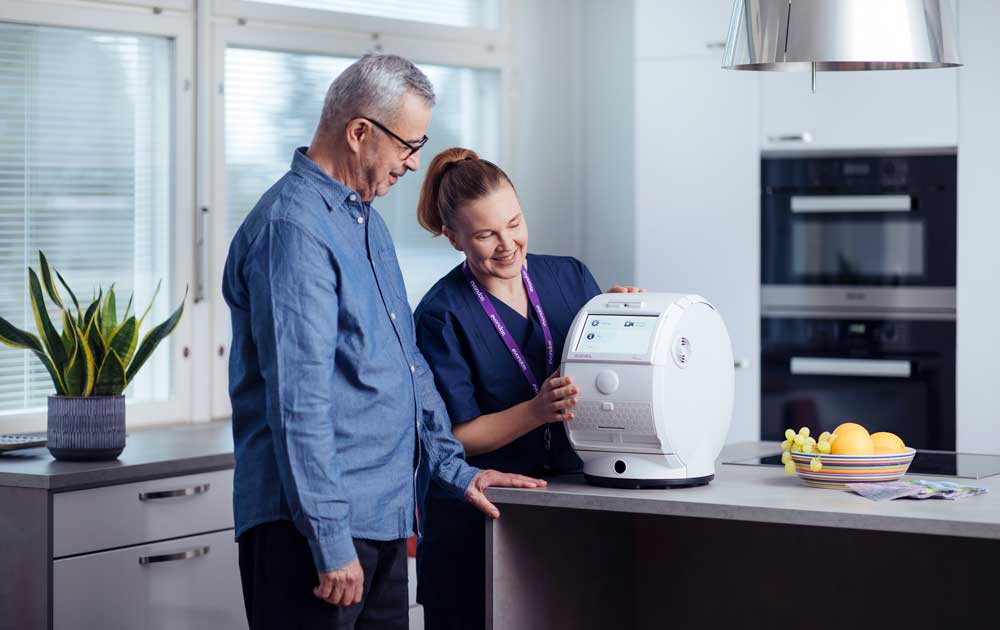
Hundreds of thousands of working days saved in the Nordics – ten million medicine doses delivered with medicine dispensing robots
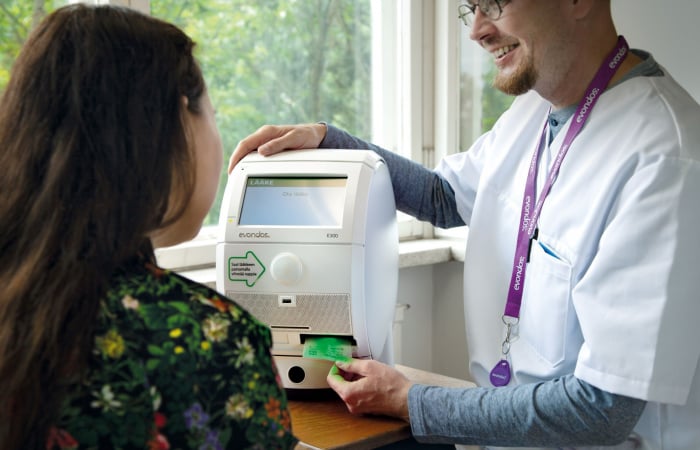
“Care providers shouldn’t have to choose between patient safety and productivity”